
EMOTIONAL INTELLIGENCE AND RELATIONSHIP MANAGEMENT
26th-27th January, 2026 30th-31st January, 2026
17th-18th June, 2026 26th-27th November,2026
Introduction
Emotional Intelligence (EQ) in relationship management is the ability to use awareness of one’s own emotions and those of others to successfully navigate, influence, and maintain healthy connections. It involves effective communication, conflict management, empathy, and collaboration to build trust and foster positive, productive interactions in both personal and professional environments.
Emotional intelligence course covers self-awareness, self-regulation, social awareness, and relationship
management. These components are further broken down into modules focusing on understanding emotions, developing communication skills, and building healthy relationships. The course may also include practical exercises, case studies, and action planning to help participants apply emotional intelligence in their personal and professional lives.
Course Content:
Module One: Understanding Emotional Intelligence:
· Definition and Importance: Defining emotional intelligence (EQ) and explaining its significance in various aspects of life including personal relationships, career, and leadership.
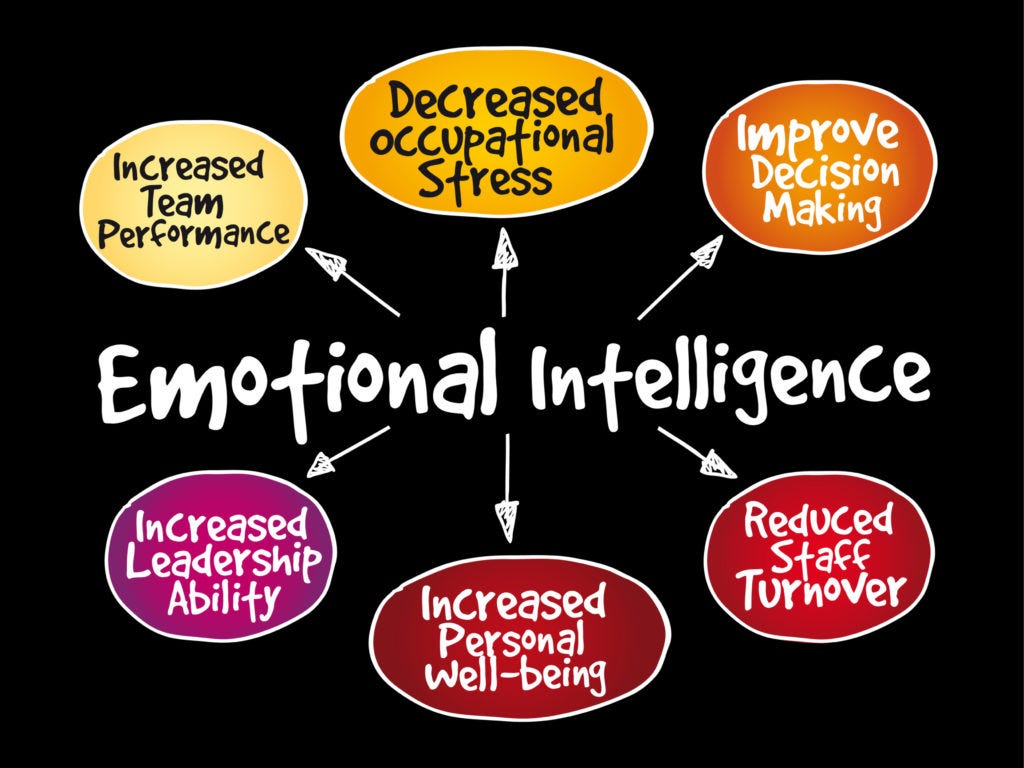
· Benefits of EQ: Exploring the advantages of having high emotional intelligence, such as improved communication, better decision-making, increased empathy, and enhanced leadership skills.
· Goleman’s Model: Introducing Daniel Goleman’s framework of emotional intelligence, which includes self-awareness, self-regulation, motivation, empathy, and social skills.
Module Two: Self-Awareness:
· Recognizing Emotions: Learning to identify and understand one’s own emotions, including their triggers and impact.
· Self-Assessment: Utilizing tools and techniques to assess one’s current emotional intelligence level.
· Understanding Personality: Exploring how personality traits influence emotional responses and interactions.
Module Three: Self-Regulation:
· Managing Emotions: Developing strategies for managing emotions effectively, including techniques for stress management and impulse control.
· Emotional Filtering: Understanding how emotional filtering can impact perceptions and reactions.
· Challenging Thought Patterns: Identifying and modifying negative or unhelpful thought patterns that affect emotional responses.
Module Four: Social Awareness:
- Empathy: Enhancing the ability to understand and share the feelings of others.
- Reading Emotional Landscapes: Learning to interpret nonverbal cues and understand the emotional context of social situations.
- Active Listening: Developing effective listening skills to better understand and respond to others’
emotions.
Module Five: Relationship Management:
· Communication Skills: Improving verbal and nonverbal communication skills to build stronger relationships.
· Conflict Management: Learning techniques for resolving conflicts constructively and maintaining positive
relationships.
· Building Rapport: Developing skills for building rapport and establishing positive connections with others.
· Influencing and Persuasion: Learning how to influence and persuade others effectively while maintaining ethical standards.
Module Six: Application of Emotional Intelligence:
· Leadership: Applying emotional intelligence principles to become a more effective and empathetic leader.
· Teamwork: Understanding how emotional intelligence contributes to building high-performing teams.
· Customer Relations: Utilizing emotional intelligence to improve customer service and build stronger customer relationships.
· Personal Growth: Recognizing the role of emotional intelligence in personal development and well-being.
Module Seven: Action Planning:
· Goal Setting: Setting specific and measurable goals for developing emotional intelligence.
· Practice and Reflection: Engaging in regular practice of emotional intelligence skills and reflecting on experiences.
· Seeking Feedback: Soliciting feedback from others to identify areas for improvement.
· Continued Learning: Exploring resources and opportunities for ongoing development of emotional intelligence.
Duration: Two (2) days Fee: N180,000
Phone No:
08052062320, 08095284269
08168381962
Email Address
training@nazellinkconsult.com info@nazellinkconsult.com
Contact Info
Address
2nd Floor, Acme House, 23, Acme Road, Ogba, Ikeja,Lagos. Nigeria.
Phone No:
08052062320, 08095284269,
07085271570
Email Address
info@nazellinkconsult.com